
MOTS-c Peptide
Price range: $65.00 through $195.00
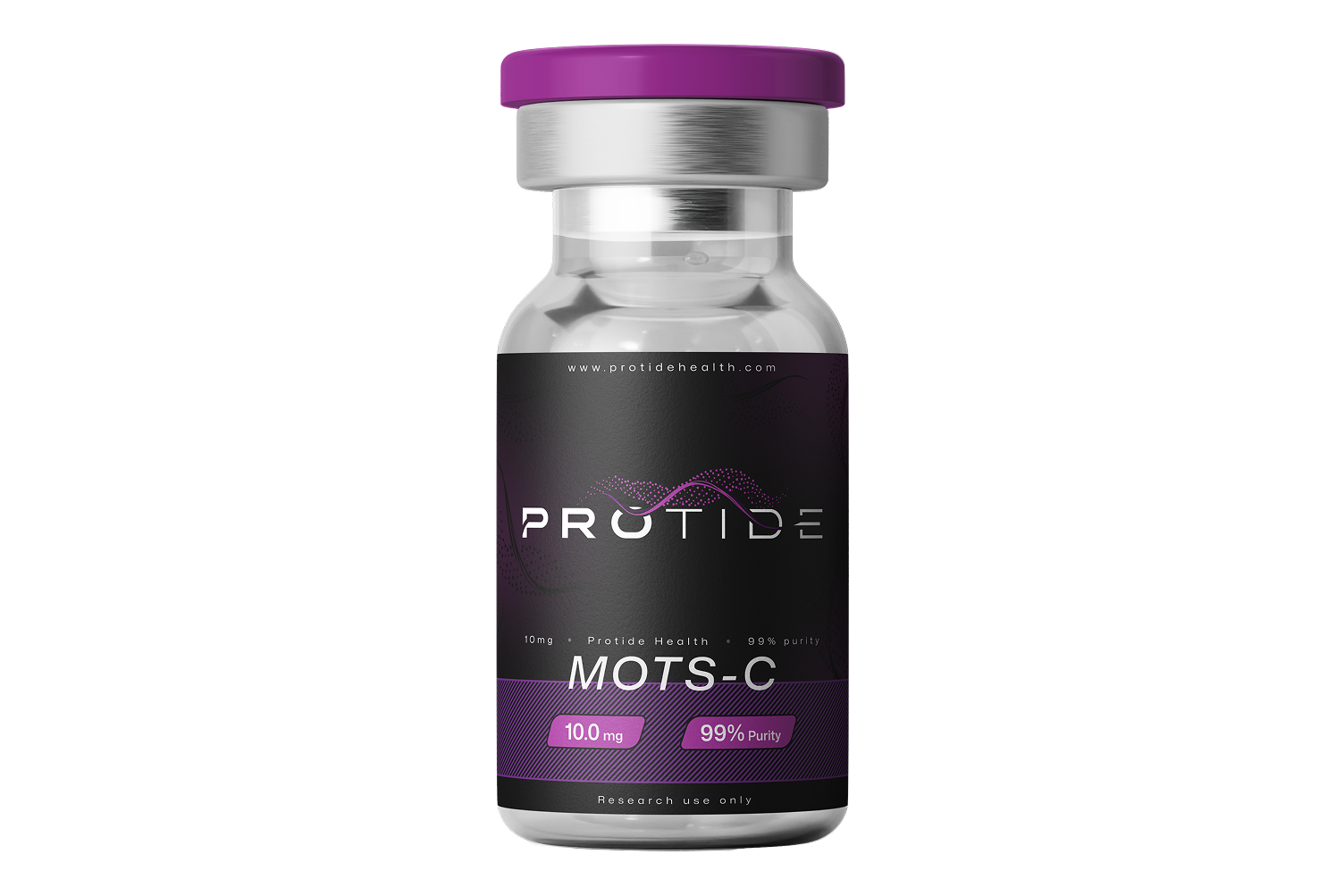
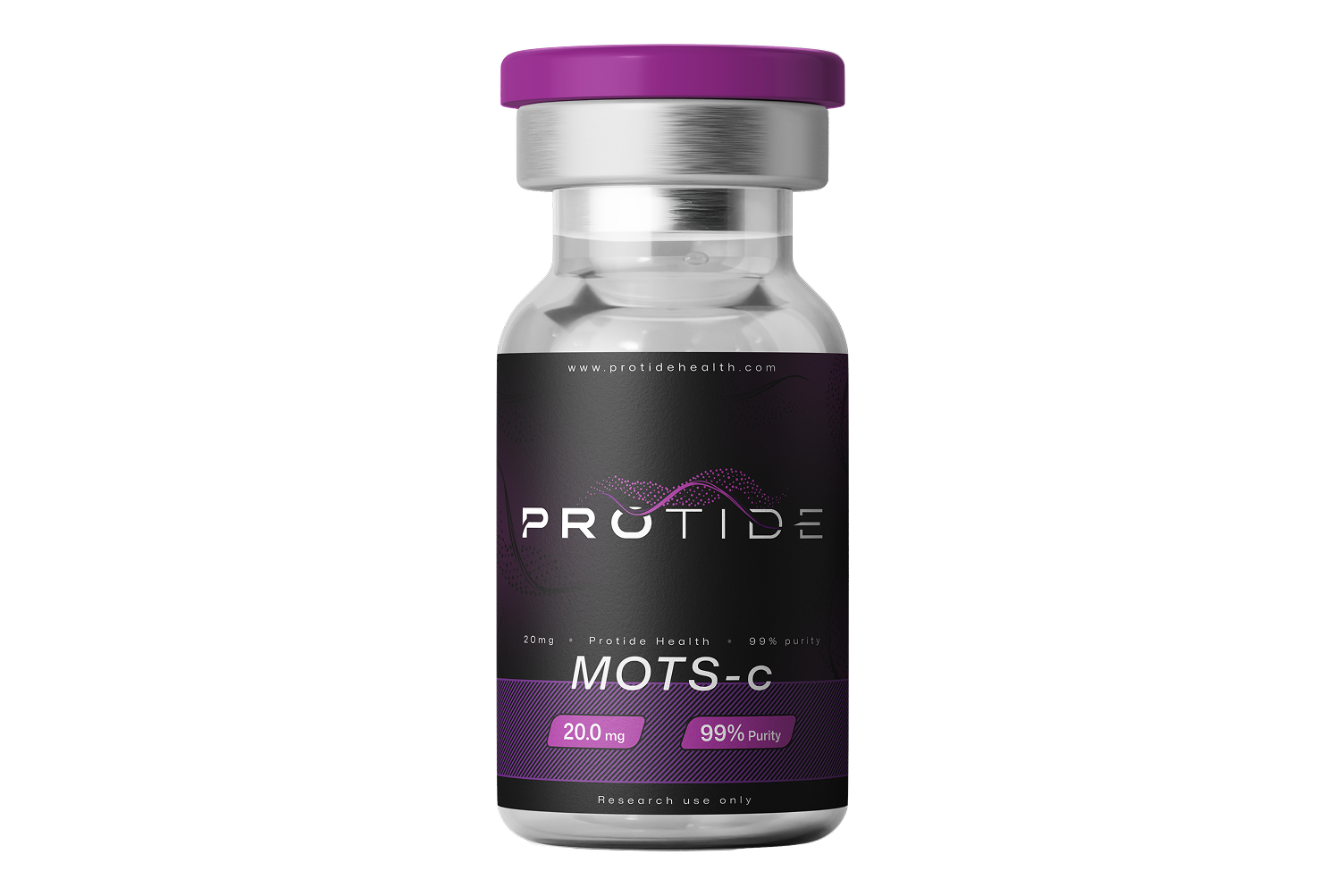
MOTS-c peptide product shot featuring professionally labeled Protide Health 3mL research vials containing white to off-white lyophilized powder, with 10mg, 20mg, and 40mg quantities clearly displayed against a clean laboratory-style background with research-use-only labeling.


MOTS-c Peptide 10mg, 20mg & 40mg – Protide Health USA
MOTS-c Peptide Overview & Technical Specifications
MOTS-c peptide, short for Mitochondrial Open Reading Frame of the 12S rRNA-c, is a 16-amino-acid mitochondrial-derived peptide associated with the MT-RNR1 region of mitochondrial DNA.
Its amino-acid sequence is:
Met-Arg-Trp-Gln-Glu-Met-Gly-Tyr-Ile-Phe-Tyr-Pro-Arg-Lys-Leu-Arg
The abbreviated sequence is:
MRWQEMGYIFYPRKLR
The supplied MOTS-c PubChem chemical record identifies MOTS-c as PubChem CID 146675088, CAS 1627580-64-6, molecular formula C101H152N28O22S2, and molecular weight approximately 2174.6 g/mol.
Protide Health supplies MOTS-c in 10mg, 20mg, and 40mg sizes as 99% purity lyophilized research material for biochemical, mitochondrial, metabolic-signaling, cellular, analytical, and qualified preclinical investigation.
Technical Specifications
- Product Name: MOTS-c
- Full Name: Mitochondrial Open Reading Frame of the 12S rRNA-c
- Available Sizes: 10mg, 20mg, 40mg
- Form: Lyophilized powder
- Vial Size: 3mL
- Purity: 99%
- Testing: HPLC-MS verified; third-party tested
- Peptide Length: 16 amino acids
- Sequence: MRWQEMGYIFYPRKLR
- CAS Number: 1627580-64-6
- PubChem CID: 146675088
- Molecular Formula: C101H152N28O22S2
- Molecular Weight: Approximately 2174.6 g/mol
- Appearance: White to off-white lyophilized powder
- Solubility: Soluble in water
- Storage: Store sealed at ≤6°C and protected from heat, light, and moisture
- Research Use: Biochemical, mitochondrial, metabolic, cellular, analytical, and qualified preclinical research only
MOTS-c Peptide Mechanism & Research Context
The biological research interest surrounding MOTS-c peptide centers on mitochondrial-to-cellular signaling.
MOTS-c was originally identified as a peptide encoded within a short open reading frame of mitochondrial 12S rRNA. Unlike conventional mitochondrial proteins that primarily function within the organelle, MOTS-c has been investigated as a signaling molecule capable of influencing cellular metabolism.
Early experimental work connected MOTS-c with:
- Folate-cycle modulation
- De novo purine biosynthesis
- AICAR-associated signaling
- AMPK activation
- Skeletal-muscle metabolism
- Glucose utilization
- Cellular metabolic homeostasis
Researchers can review broader MOTS-c mitochondrial peptide research indexed by PubMed for peer-reviewed studies on mitochondrial signaling, metabolic stress, AMPK, nuclear translocation, aging models, and cellular metabolism.
Preclinical Research Applications
Folate-AICAR-AMPK Pathway Research
One of the best-characterized experimental pathways for MOTS-c involves changes in folate and purine metabolism.
The original research describing MOTS-c reported inhibition of the folate cycle and its linked de novo purine biosynthesis pathway, leading to accumulation of the AMP analogue AICAR and activation of AMPK.
AMPK is an important cellular energy-sensing enzyme studied in connection with:
- ATP/AMP balance
- Cellular energy stress
- Glucose transport
- Fatty-acid metabolism
- Mitochondrial regulation
- Metabolic adaptation
This provides a mechanistic framework for MOTS-c peptide research without establishing therapeutic outcomes for this laboratory product.
Mitochondrial-to-Nuclear Signaling Research
Later research identified another important feature of MOTS-c biology: movement from the cytoplasm toward the nucleus during metabolic stress.
In experimental cells exposed to metabolic stress, MOTS-c was reported to translocate to the nucleus in an AMPK-dependent manner.
Nuclear MOTS-c research has examined gene-expression responses involving stress-responsive pathways, including genes associated with antioxidant response elements.
This places MOTS-c within the broader field of mitonuclear communication, where mitochondrial-derived signals influence nuclear gene expression.
NRF2 and Cellular Stress Research
Experimental work on nuclear MOTS-c has also investigated interaction with stress-responsive transcription factors including NRF2.
NRF2 is widely studied in relation to antioxidant response elements and cellular adaptation to oxidative and metabolic stress.
Research endpoints may include:
- Stress-responsive gene expression
- Nuclear translocation
- NRF2-associated transcription
- Antioxidant-response elements
- Cellular adaptation to glucose restriction
- Metabolic stress signaling
These observations relate to controlled cellular models and do not establish clinical antioxidant effects.
Skeletal-Muscle Research
Skeletal muscle has featured prominently in the preclinical MOTS-c literature.
Research has examined MOTS-c in relation to:
- Glucose utilization
- Insulin-associated signaling
- AMPK activity
- Skeletal-muscle metabolism
- Mitochondrial function
- Exercise-associated signaling
- Metabolic adaptation
The original discovery study identified skeletal muscle as an important experimental target tissue in mouse models.
MOTS-c and Metabolic Research
The broader MOTS-c literature includes studies in high-fat-diet and age-related mouse models.
Research has evaluated endpoints such as:
- Glucose tolerance
- Insulin sensitivity
- Body-weight changes
- Fat accumulation
- Plasma metabolites
- Fatty-acid oxidation
- Skeletal-muscle metabolic pathways
A 2019 metabolomics study in diet-induced obese mice reported changes in sphingolipid, monoacylglycerol, and dicarboxylate metabolism alongside experimental changes in insulin sensitivity and beta-oxidation.
These are animal findings and should not be presented as demonstrated human effects of the Protide Health product.
MOTS-c Benefits: What Research Actually Shows
The keywords mots c benefits and mots-c benefits often lead to claims about weight management, insulin sensitivity, exercise performance, or aging.
Scientific interpretation requires more precision.
Published preclinical research has investigated:
- AMPK-associated metabolic signaling
- Glucose metabolism
- Insulin-related endpoints
- Mitochondrial stress responses
- Nuclear gene regulation
- Skeletal-muscle metabolism
- Plasma metabolomics
- Cellular stress adaptation
Most interventional evidence comes from cell and animal models.
Accordingly, these findings do not establish human weight-loss, metabolic, exercise-performance, longevity, or therapeutic benefits for this research product.
MOTS-c and Exercise-Associated Research
MOTS-c has also attracted interest in exercise biology.
Reviews of mitochondrial-derived peptides describe changes in endogenous MOTS-c expression or circulating levels in association with metabolic stress and exercise.
This has generated research questions involving:
- Exercise-responsive mitochondrial signaling
- Skeletal-muscle adaptation
- Metabolic flexibility
- Stress-response gene regulation
- Mitochondrial-to-nuclear communication
Such observations concern endogenous biology and experimental models rather than demonstrating that externally supplied laboratory MOTS-c produces exercise-enhancing effects.
MOTS-c Side Effects and Research Limitations
The phrase mots-c side effects relates to human safety and tolerability questions.
The Protide Health material is not an approved clinical product and does not have an established human safety profile.
Important limitations include:
- Much of the experimental evidence comes from cultured cells and rodents.
- Mouse metabolic effects cannot establish equivalent human outcomes.
- Endogenous circulating MOTS-c is not equivalent to an externally supplied research preparation.
- Observational human associations do not establish causation.
- Findings involving exercise-related endogenous MOTS-c do not establish performance-enhancing effects.
- Different experimental concentrations and assay conditions can produce different outcomes.
- Long-term human safety and efficacy cannot be inferred from preclinical research.
No human safety claims are made for this product.
MOTS C Dosage Searches & Laboratory Research
The phrase mots c dosage is commonly searched in relation to human administration.
For this Protide Health product, the terms mots c dosage, mots-c dosage, and mots-c dosing do not represent recommended use instructions.
The 10mg, 20mg, and 40mg values identify the quantity of research peptide supplied in each vial.
They are not human doses.
Protide Health does not provide:
- Human dosing schedules
- Injection instructions
- Dosing frequency
- Treatment cycles
- Body-weight calculations
- Reconstitution instructions for administration
- Athletic-performance protocols
Laboratory researchers should determine experimental concentrations according to their validated assay design, institutional protocol, and specific research model.
MOT-C Peptide Search Terminology
The search phrase mot-c peptide is commonly used as a misspelling or shortened variation of MOTS-c peptide.
The scientifically recognized name is MOTS-c, derived from “Mitochondrial Open Reading Frame of the 12S rRNA-c.”
Protide Health uses MOTS-c throughout the technical product specifications for consistency with the scientific literature.
Research Format & Storage
Protide Health supplies MOTS-c peptide as white to off-white lyophilized material in a 3mL vial.
Available quantities are:
- 10mg
- 20mg
- 40mg
According to the supplied specification, unopened research material should be:
- Stored at ≤6°C
- Kept sealed
- Protected from heat
- Protected from direct light
- Protected from moisture
The material is specified as soluble in water.
Research Limitations
MOTS-c remains an active area of mitochondrial-derived peptide research.
Researchers should consider several limitations when interpreting the evidence:
- The discovery literature is heavily preclinical.
- Metabolic effects reported in rodents cannot establish human therapeutic outcomes.
- Nuclear translocation has been demonstrated under particular metabolic-stress conditions.
- AMPK-associated effects depend on cellular context.
- Human circulating-level studies should not be interpreted as intervention trials.
- Evidence related to aging or exercise remains mechanistically interesting but does not establish anti-aging or performance outcomes.
- The exact Protide Health 10mg, 20mg, or 40mg laboratory preparations have not been evaluated as pharmaceutical products.
For these reasons, MOTS-c should be discussed in terms of experimental mechanisms rather than human treatment claims.
Literature & Citation Index
The Mitochondrial-Derived Peptide MOTS-c Promotes Metabolic Homeostasis and Reduces Obesity and Insulin Resistance
Authors: Changhan Lee et al.
Journal: Cell Metabolism
Year: 2015
PMID: 25738459
DOI: 10.1016/j.cmet.2015.02.009
Research Context: Original identification of the 16-amino-acid mitochondrial-derived peptide; folate cycle, purine biosynthesis, AMPK signaling, skeletal muscle, and mouse metabolic models.
MOTS-c: A Novel Mitochondrial-Derived Peptide Regulating Muscle and Fat Metabolism
Authors: Changhan Lee et al.
Journal: Free Radical Biology and Medicine
Year: 2016
PMID: 27216708
DOI: 10.1016/j.freeradbiomed.2016.05.015
Research Context: Review of MOTS-c biology, mitochondrial signaling, skeletal-muscle research, and experimental metabolic pathways.
The Mitochondrial-Encoded Peptide MOTS-c Translocates to the Nucleus to Regulate Nuclear Gene Expression in Response to Metabolic Stress
Authors: Kyung Hwa Kim et al.
Journal: Cell Metabolism
Year: 2018
PMID: 29983246
DOI: 10.1016/j.cmet.2018.06.008
Research Context: AMPK-dependent nuclear translocation, metabolic stress, antioxidant-response elements, NRF2-associated signaling, and nuclear gene regulation.
The Mitochondrial-Derived Peptide MOTS-c Is a Regulator of Plasma Metabolites and Enhances Insulin Sensitivity
Year: 2019
PMID: 31293078
DOI: 10.14814/phy2.14171
Research Context: Metabolomics, fatty-acid oxidation, plasma metabolic pathways, and diet-induced obese mouse models.
Mitochondria-Derived Peptide MOTS-c: Effects and Mechanisms Related to Stress, Metabolism and Aging
Year: 2023
PMID: 36670507
DOI: 10.1186/s12967-023-03885-2
Research Context: Review of mitonuclear signaling, Folate-AICAR-AMPK pathways, metabolic stress, exercise-associated biology, and aging-related research.
Related Protide Health Research Products
Researchers examining NNMT-related metabolic research can review 5-Amino-1MQ for a chemically distinct small-molecule enzyme-inhibitor research system.
The Acetic Acid 0.6% research solution provides a separate laboratory reagent for research workflows requiring an acidic solution environment.
Researchers may also examine AOD-9604 research peptide for a structurally and mechanistically distinct peptide research model.
These materials have different structures, biochemical targets, and experimental applications and should not be considered interchangeable.
Frequently Asked Questions
What is MOTS-c peptide?
MOTS-c peptide is a 16-amino-acid mitochondrial-derived peptide encoded by a short open reading frame within the mitochondrial 12S rRNA region.
What does MOTS-c stand for?
MOTS-c stands for Mitochondrial Open Reading Frame of the 12S rRNA-c.
What is the MOTS-c sequence?
The sequence is:
Met-Arg-Trp-Gln-Glu-Met-Gly-Tyr-Ile-Phe-Tyr-Pro-Arg-Lys-Leu-Arg
or:
MRWQEMGYIFYPRKLR
What is the molecular weight of MOTS-c?
The verified molecular weight is approximately 2174.6 g/mol.
What is the PubChem CID for MOTS-c?
The verified PubChem identifier is CID 146675088.
What pathways does MOTS-c research examine?
Research has examined folate and purine metabolism, AICAR accumulation, AMPK signaling, mitochondrial stress responses, nuclear gene regulation, NRF2-associated pathways, skeletal-muscle metabolism, and metabolic homeostasis.
What does research say about MOTS-c benefits?
Cell and animal studies have reported metabolic and stress-response changes, but these preclinical observations do not establish therapeutic, weight-loss, anti-aging, or performance benefits for the Protide Health research product.
What does research say about MOTS-c side effects?
This research product does not have an established human safety profile. Published preclinical studies cannot establish human tolerability or long-term safety.
What is the MOTS c dosage?
Protide Health does not provide a human mots c dosage. The 10mg, 20mg, and 40mg values are vial quantities for laboratory research, not recommended doses.
Is this product intended for human use?
No. It is supplied exclusively for biochemical, mitochondrial, cellular, analytical, in-vitro, metabolic, and qualified preclinical research.
Laboratory Terms & Compliance
Laboratory Research Use Only
This product is supplied exclusively for laboratory research, analytical testing, in-vitro studies, preclinical research, and qualified scientific experimentation.
It is not intended for human or veterinary consumption, medical use, diagnostic use, therapeutic use, weight-loss treatment, metabolic treatment, anti-aging treatment, athletic-performance enhancement, or clinical administration.
No human dosage, dosing schedule, injection protocol, administration frequency, cycle, treatment recommendation, or preparation instructions are provided.
The purchaser is responsible for appropriate laboratory handling, storage, and use in accordance with applicable institutional, federal, state, and local requirements.
For research use only.
| Select vial strength |
10mg ,20mg ,40mg |
|---|


MAECENAS IACULIS
Vestibulum curae torquent diam diam commodo parturient penatibus nunc dui adipiscing convallis bulum parturient suspendisse parturient a.Parturient in parturient scelerisque nibh lectus quam a natoque adipiscing a vestibulum hendrerit et pharetra fames nunc natoque dui.
ADIPISCING CONVALLIS BULUM
- Vestibulum penatibus nunc dui adipiscing convallis bulum parturient suspendisse.
- Abitur parturient praesent lectus quam a natoque adipiscing a vestibulum hendre.
- Diam parturient dictumst parturient scelerisque nibh lectus.
Scelerisque adipiscing bibendum sem vestibulum et in a a a purus lectus faucibus lobortis tincidunt purus lectus nisl class eros.Condimentum a et ullamcorper dictumst mus et tristique elementum nam inceptos hac parturient scelerisque vestibulum amet elit ut volutpat.
Related products

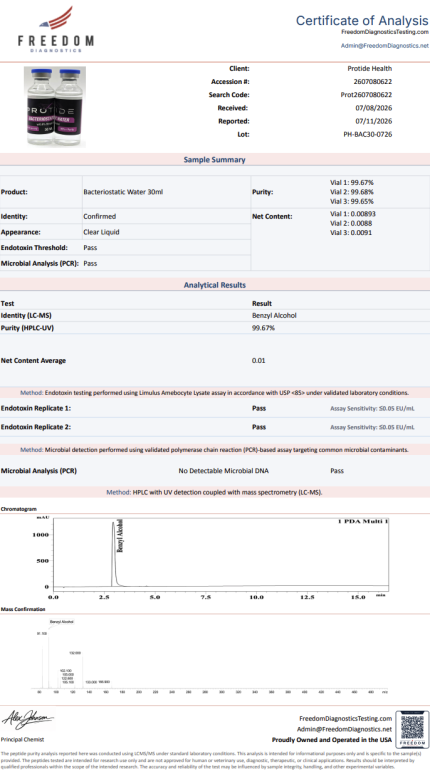
Bacteriostatic Water (0.9% Benzyl Alcohol)
Price range: $14.99 through $18.99
Sermorelin
Price range: $55.00 through $105.00
Reviews
There are no reviews yet.